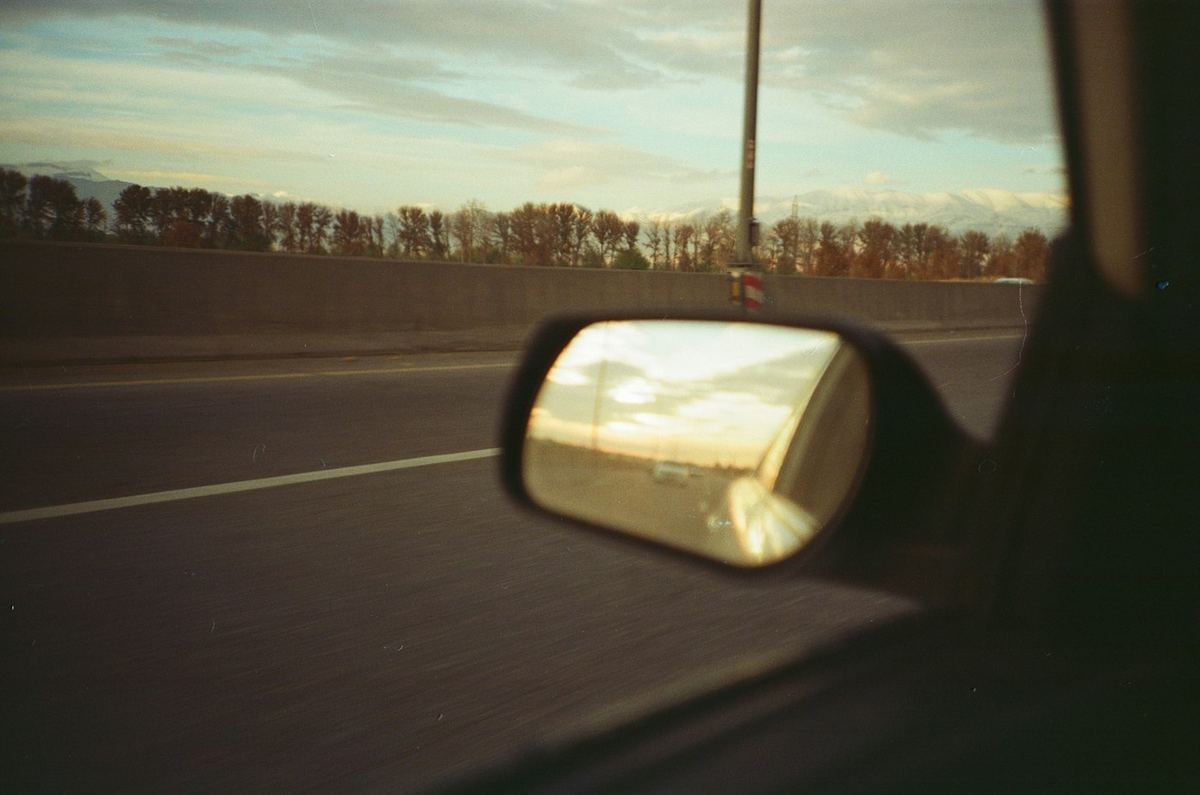
Know what is beside you before you move
Every car has areas that none of its mirrors show. A whole car, a motorcycle or a cyclist can sit in one of them for several seconds without the driver knowing. Setting the mirrors well shrinks those areas; turning your head covers what is left.
This page explains a mirror setting many instructors teach, a routine for checking before you change lanes or turn, and how to stay out of other drivers' blind spots, which matters just as much.
Setting your mirrors
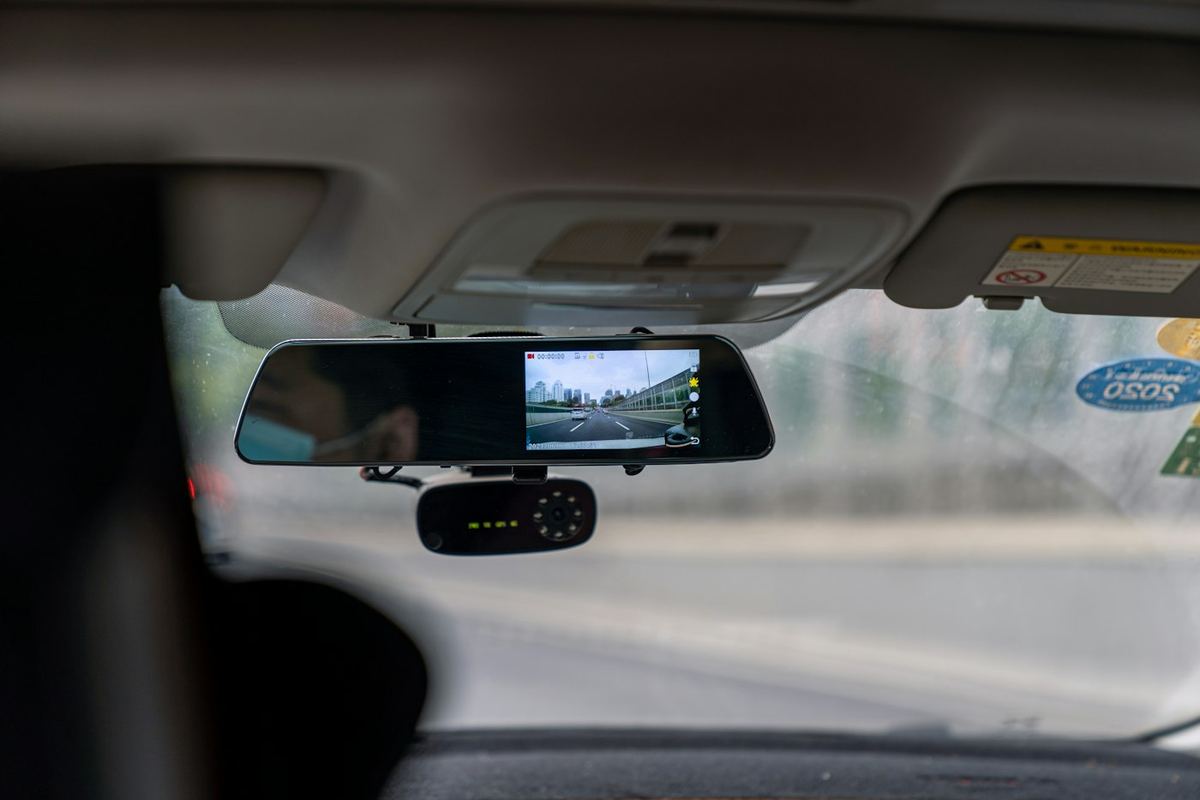
- Set the inside mirror to frame the whole rear window
- Lean your head toward the driver's window, then set the left mirror so the side of the car just disappears
- Lean toward the center of the car and set the right mirror the same way
- Sit up normally: a car passing should move from the inside mirror to a side mirror without vanishing
- Recheck the settings whenever someone else has driven the car
This setting moves the side mirrors outward so they show the lanes beside you instead of your own car's flanks. It takes a few drives to get used to. Even with good mirrors, a quick look over the shoulder before moving sideways stays part of the routine.
Mirror, signal, look
Check the mirror, turn on the signal, then glance over your shoulder. Move only when all three agree the space is clear.
Stay visible
If you can't see a truck driver's face in their mirror, they can't see you. Pass steadily and don't linger beside large vehicles.
Mind the small ones
Motorcycles and bicycles fit easily inside a blind spot. Look specifically for them before turning or changing lanes.
Learning your own car’s blind spots
Every model puts its pillars, headrests and mirrors in slightly different places, so the blind spot in one car is not the blind spot in the next. Learn the shape of yours by sitting in the driver’s seat while someone walks slowly around the parked car, and note where they vanish. Blind-spot lights and rear cameras add a second opinion; keep their lenses and sensors clean, because dirt and snow can blind them.
What good mirror habits give you
A clear picture of the road around you. You know who is behind, who is closing in and where there is room to move if you need it. Lane changes become calm and deliberate, and the drivers around you can read your intentions from the signal you gave in good time.
Common questions
They help, but they can miss fast-approaching vehicles, bicycles and anything in poor weather. Treat a warning light as an extra check, and keep turning your head before you move.
The right side is farther from you and the pillars of the car block more of it. Take a little longer, and use the right mirror and a shoulder check together.
If you are just behind and beside another vehicle and can't see the driver in their side mirror, assume they can't see you. Ease off or move past until you are clear.
This page is general information about auto safety and driving habits. It is not a lesson, legal advice or a statement of the law where you drive; your state’s driver handbook and a licensed instructor come first.