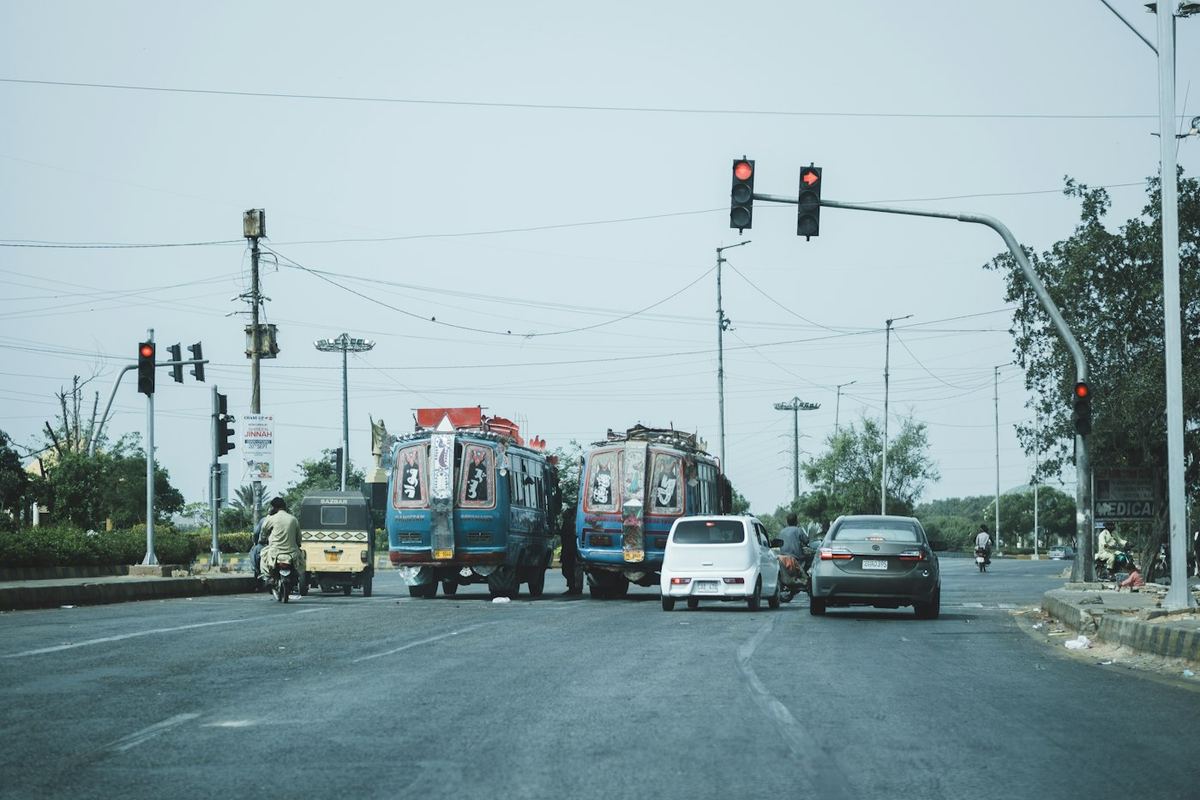
Where roads cross, assume someone will make a mistake
Intersections bring traffic from several directions into the same few square yards, often with pedestrians and cyclists in the mix. Many drivers arrive there tired, rushed or distracted. A defensive driver arrives ready for one of them to go when they shouldn't.
The habits here are simple: approach at a speed that lets you stop, look in every direction even when you have the green, and keep your wheels straight while you wait to turn.
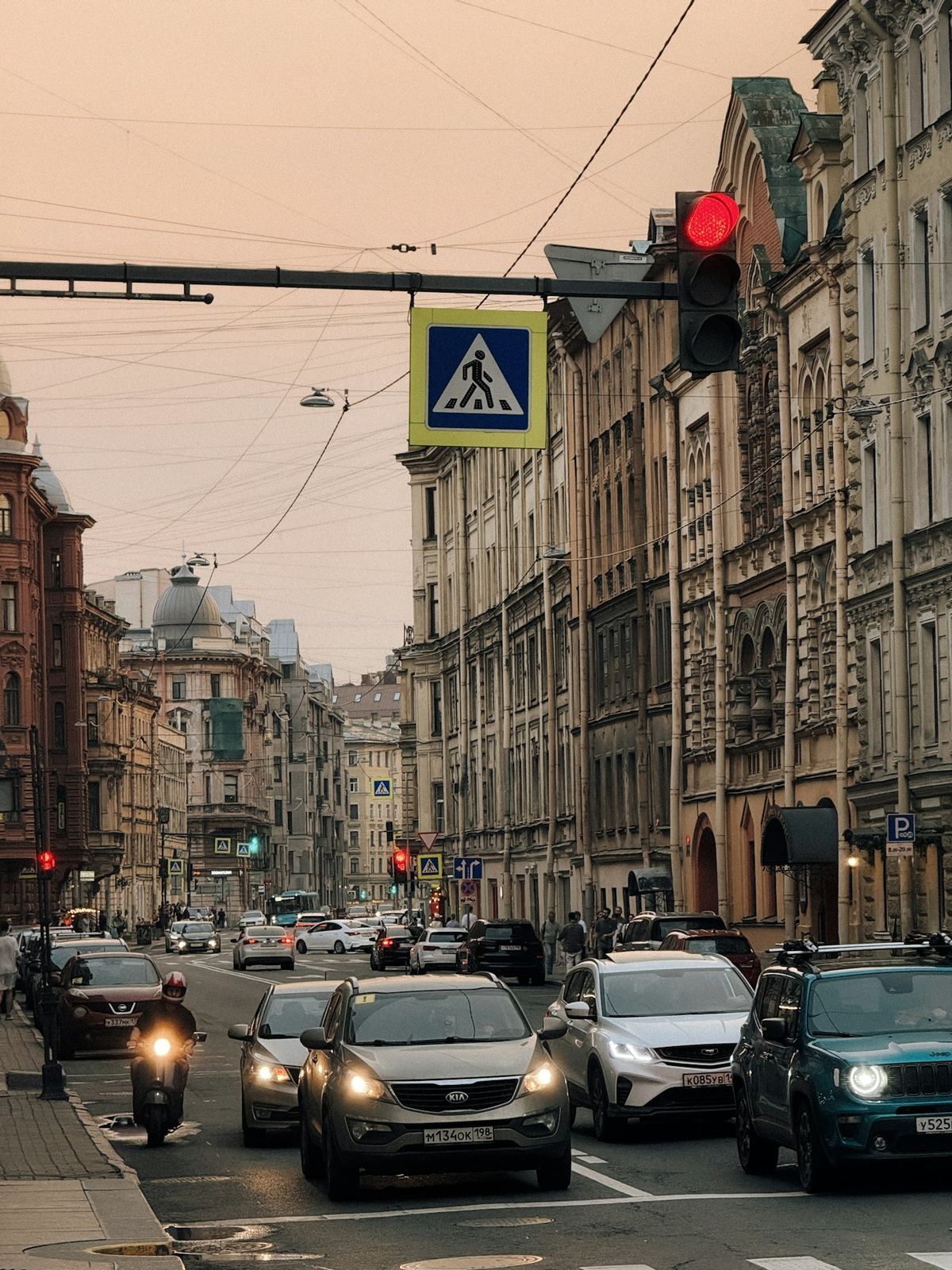
Approaching any intersection
- Ease off the gas and cover the brake as you get near
- Look left, right, then left again before you enter
- Pause a beat when your light turns green, and look before moving
- Watch for pedestrians in every crosswalk you will drive through
- Keep wheels pointed straight while waiting to turn left
Waiting with wheels turned left means a push from behind sends you into oncoming traffic. With wheels straight, the same push only moves you forward. Turn the wheel when the gap arrives, not before.
Stale green lights
A light that has been green for a while may change as you arrive. Be ready to stop instead of speeding up to beat it.
Right turns on red
Where allowed, stop fully, look for pedestrians crossing in front of you, and remember the driver turning left may not see you.
Four-way stops
Make eye contact where you can. When it is unclear who goes, waving someone through costs a second or two.
Lights that speak for your car
Brake lights and turn signals are how the drivers behind and beside you read your plans at a junction. Every so often, ask someone to stand behind the car while you press the pedal and work each signal, so a failed bulb never leaves you signalling to nobody. At night, headlights aimed too low shorten your view across a wide intersection; most service shops can check the aim.
Why it's worth the extra look
A second look and a covered brake cost almost nothing on a normal day. On the day another driver runs a light or a walker steps out from behind a bus, they give you the time to stop rather than collide. The habit becomes automatic quickly and makes every crossing calmer.
Common questions
Drivers sometimes push through a light that has just turned red. Pausing and looking both ways before entering gives them time to clear.
Generally the first to arrive goes first, and when two arrive together the driver on the right goes first. Rules vary by state, so check your driver handbook, and when in doubt let the other driver go.
Wait. If a truck or bus blocks your view of oncoming traffic, hold your position until it moves or you can see clearly. Creeping out blind is how side impacts happen.
This page is general information about auto safety and driving habits. It is not a lesson, legal advice or a statement of the law where you drive; your state’s driver handbook and a licensed instructor come first.